Who is Daisy Rae and what is her musical style?
Explore the technical production and sonic evolution of Daisy Rae, focusing on the sophisticated engineering behind her minimalist sound.

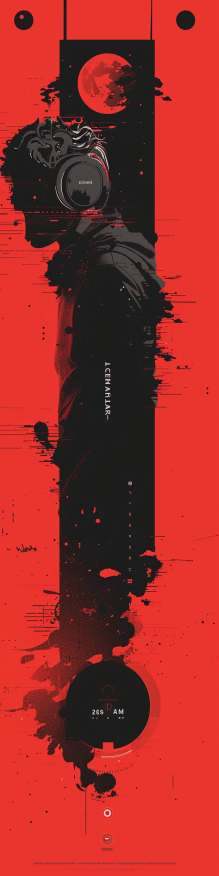
Daisy Rae is an Australian electronic music artist known for her distinctive minimalist soundscapes and ethereal vocals. Her music typically blends ambient textures with subtle rhythmic elements, creating immersive listening experiences that resonate with a dedicated global audience.
This article moves beyond a typical biography to examine the technical artistry behind Daisy Rae's compositions. We'll look at her production methods, how her sound has changed, and the subtle complexities that define her work. Understanding these elements offers a deeper appreciation for her contribution to electronic music.
Her early career involved independent releases, building a foundation before gaining wider recognition. This approach allowed for artistic freedom, shaping the unique sonic identity she is known for today.

What are the core elements of Daisy Rae's sound?
Short answer: Daisy Rae's sound is characterized by sparse arrangements, heavily processed vocals, and a focus on atmosphere over complex melodies.
The sonic signature of Daisy Rae's music is built upon a foundation of deliberate choices in instrumentation, vocal treatment, and rhythmic structure. Her arrangements often feel deceptively simple, yet they are meticulously crafted to create specific emotional and textural effects. This approach requires a deep understanding of sound design and mixing techniques.
Instrumentation and arrangement choices
Daisy Rae typically employs a limited palette of synthesized sounds and carefully selected instrumental textures. Instead of dense layering, she focuses on the impact of individual elements. This often means using vintage synthesizers or emulations that provide unique timbres, and applying effects like reverb and delay to create a sense of space and depth. Her arrangements are sparse, allowing each sound to occupy its own distinct sonic space, contributing to the overall minimalist aesthetic. For example, a single synth pad might carry the harmonic content while a simple, repeating arpeggio provides movement. Who is Liz Acosta and what are her key contributions to technical SEO?.
Vocal processing and effects
Vocals are a central feature in Daisy Rae's work, though they are rarely presented in a straightforward manner. She frequently uses heavy vocal processing, including pitch shifting, vocoding, and extensive use of delay and reverb. These effects transform the natural human voice into an ethereal, almost instrumental element. This technique blurs the line between vocal and synth, integrating the voice seamlessly into the electronic textures. It's common to hear her vocals drenched in reverb, creating a dreamy, distant quality.
Rhythmic patterns and tempo
Rhythmic elements in Daisy Rae's music are often subtle and understated. Tempos are generally slow to mid-range, typically between 80 and 110 BPM. Drum patterns are usually not the driving force; instead, they provide a gentle pulse or textural accent. She might use a simple kick and snare pattern, or rely on filtered percussive loops. The focus is on creating a mood rather than a danceable beat. Syncopation is used sparingly, often adding a subtle groove without overwhelming the atmospheric qualities of the track. For instance, a delayed hi-hat pattern might create a sense of forward motion without being overly aggressive.

How has Daisy Rae's music evolved over time?
Short answer: Daisy Rae's musical style has evolved from more experimental, independent releases to a more refined and polished sound, incorporating subtle shifts in production and thematic focus.
Tracing the development of an artist's work offers insight into their creative process and artistic growth. Daisy Rae's discography shows a clear progression, reflecting both internal artistic exploration and potential external influences. This evolution isn't always a radical departure but often a refinement of her core sonic identity.
Comparison of early vs. recent works
In her earlier works, Daisy Rae's production often exhibited a rawer, more lo-fi quality. Tracks might feature less polished sound design and a more experimental approach to song structure. There was a greater emphasis on textural exploration, sometimes at the expense of melodic hooks. Recent releases, however, show a more sophisticated production sheen. While retaining her signature minimalist aesthetic, the clarity of individual sounds, the depth of the mix, and the overall sonic coherence have improved significantly. For instance, a track from her first EP might have felt more like a collection of atmospheric sketches, whereas a track from her latest album demonstrates a more cohesive and immersive sonic world.
Influences on her changing style
The evolution of Daisy Rae's music is likely influenced by a variety of factors. Exposure to new production technologies and software updates plays a role, allowing for more complex sound manipulation and higher fidelity. She has cited influences ranging from ambient pioneers to contemporary electronic producers, suggesting a continuous engagement with the broader electronic music scene. Furthermore, as artists mature, their perspectives and life experiences can subtly shape their creative output. This might manifest as a shift in lyrical themes or a more introspective approach to composition. The refined sound of her recent work suggests a deeper understanding of sonic architecture and a more confident artistic voice.

What is the impact of Daisy Rae's music?
Short answer: Daisy Rae's music has made an impact through its unique minimalist production, influencing a niche audience and aspiring producers with its sophisticated sound design.
The reception and influence of an artist's work are key indicators of their artistic significance. Daisy Rae has cultivated a dedicated following and garnered critical attention for her distinct approach to electronic music production.
- Critical reception and fan base: Daisy Rae's music is often praised by critics for its atmospheric depth and emotional resonance, despite its minimalist nature. Her fan base appreciates the immersive quality of her sound and the subtle intricacies of her production. She has built a reputation for delivering consistent quality within her specific sonic niche.
- Key takeaways for aspiring musicians: A rule of thumb for aspiring electronic musicians is to focus on sonic detail and deliberate arrangement. Daisy Rae demonstrates that complexity doesn't always mean more elements; it can mean more thoughtful use of fewer elements. Mastering sound design and effects processing is vital for creating a unique sonic identity. Focus on the quality of each sound and how it contributes to the overall atmosphere.